


Friday, Feb 6, 2026
9 DIY Laundry Room Makeover Ideas That Work on Any Budget
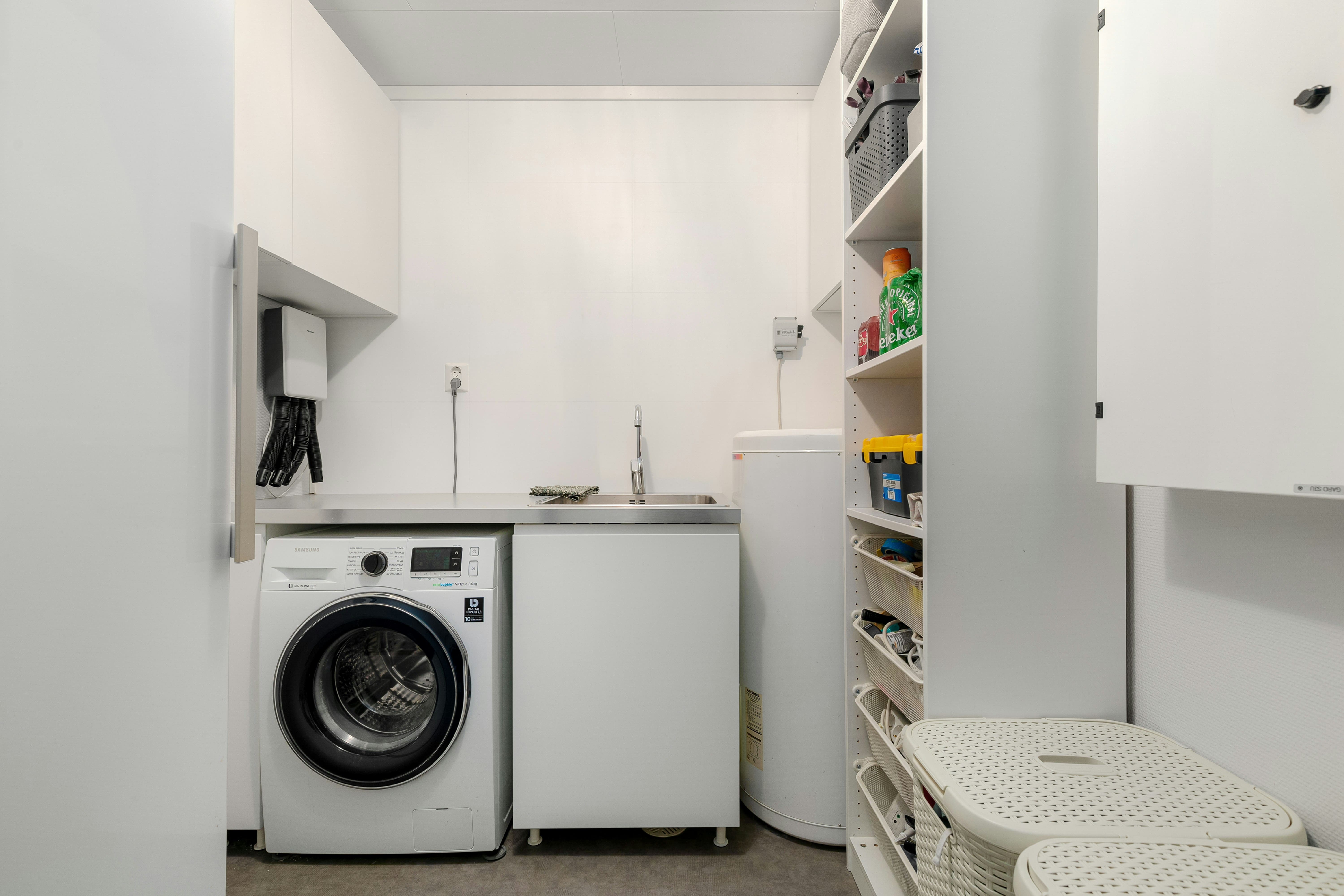
Laundry rooms consistently rank as the room homeowners hate spending time in the most. And although they tend to be ugly, the main reason for this is that they're dark, cramped spaces that often double as the unofficial item dump.
The laundry room makeovers that worked in late 2025 solved specific problems while adding decorative touches. Here are 9 DIY ideas to help clear the clutter and make laundry a bit more enjoyable.
1. Build A Raised Platform with Storage Underneath

Bending over front-load machines will cause you a backache over time, and brand-name pedestals cost $200-300 each (so $400-600 for both machines).
What you can do is build your own platform using 2x4 lumber and plywood for ~$80-120 total.
The frame elevates your machines by 12-15 inches, putting the controls and doors at a comfortable height. Leave the front open and slide your laundry baskets underneath. Doing this returns the floor space that the platform consumes while creating the storage you need.
Paint or stain the platform to match your room. This takes 3-4 hours to build and immediately changes how your back feels after loading laundry.
2. Install a Plywood Counter for Folding (Works with Top-Loaders)

Most laundry rooms lack dedicated folding space, forcing you to fold on your bed or dining table. A simple plywood counter spanning your machines costs ~$40-70 in materials and takes an afternoon to install.
For top-loaders, create a hinged section above the washer lid using piano hinges (~$15). The counter flips up when you need washer access and stays down the rest of the time, giving you the continuous workspace that front-loader owners get automatically.
Seal the plywood with polyurethane to protect it against moisture.
3. Paint Your Cabinets Instead of Replacing Them

New cabinets cost way more than giving older ones a cosmetic upgrade. So, why not just do it? Painting your existing cabinets costs approximately $50-80 in primer, paint, and sandpaper.
Clean the cabinets thoroughly with TSP, sand them with 120-grit paper, apply bonding primer, then apply two coats of semi-gloss cabinet paint. The humidity in laundry rooms demands proper prep, but the process is straightforward and takes a weekend.
Here’s a short video on how to repaint your cabinets, or you can read the article.
P.S. You can also swap the hardware while you're at it (it’s around $3-8 per pull), as new knobs can instantly modernize dated cabinets.
4. Add Peel-and-Stick Wallpaper to One Wall

Peel-and-stick wallpapers were among the most common budget-friendly laundry makeovers in 2025, especially since an accent wall costs ~$30-60 and takes 1-2 hours to install.
The best changes involved using wallpaper on the wall behind machines or above a folding counter to create visual interest, rather than covering the entire room.
5. Decant Your Detergents into Matching Containers
Brightly colored detergent jugs can create visual chaos. If you’re a minimalist or prefer uniformity, transfer products into uniform glass dispensers or simple white containers with labels to get a simplistic, orderly look.
Your laundry room will instantly feel calmer without requiring more organizational changes, and your cleaning products become neutral elements rather than visual distractions competing for attention.
Tip: Use pump dispensers for liquid detergent and wide-mouth jars for powder, and label everything clearly so others know what's what.
6. Create a Skinny Rolling Cart for Dead Space

The 6–8-inch gap between your washer and dryer or between machines and walls typically collects lint and lost socks. You can use ultra-slim rolling carts (they cost about $25-45) to reclaim this space for your frequently used supplies like detergent, dryer sheets, stain removers, and wool dryer balls.
Tip: Measure your gap carefully before ordering any carts, as they come in 5-inch, 7-inch, and 9-inch widths.
7. Replace the Fluorescent Lighting in Your Laundry Room with Better Fixtures

Single fluorescent tubes can make everything look terrible and provide inadequate task lighting for treating stains or sorting colors. To improve your laundry performance, replace them with flush-mount LED fixtures containing multiple bulbs (costs approximately $50-80 for the fixture and takes 1 hour to install).
Good lighting reduces mental resistance to starting laundry, which might be the most valuable upgrade of all.
Tip: Choose warm white bulbs (2700-3000K) rather than cool white for a less clinical atmosphere.
8. Add Wall-Mounted Drying Racks That You Can Fold Away

Floor drying racks consume precious space in small laundry rooms, while wall-mounted fold-down racks provide 15-20 linear feet of hanging space when extended and fold completely flat against the wall when you’re not using them.
Mount them above your machines or on an adjacent wall at a height that's comfortable for hanging clothes. They handle delicates, sweaters, and anything else that can't go in the dryer without permanently occupying floor space.
Tip: Installing them requires finding wall studs and securely mounting the bracket (this isn't optional with wet laundry weight). This guide should help.
9. Know When to Stop Adding Things

It’s easy to want to do more, but it’s just as easy for things to go wrong and be a mess, especially when you try to turn your laundry room into a folding station, storage hub, utility closet, and pet feeding area simultaneously.
Pick one primary function and build around it.

Common DIY Laundry Room Questions
Will peel-and-stick tile survive behind a dryer?
Yes, if installed on smooth surfaces away from direct vent heat. Quality vinyl tiles tolerate typical dryer temperatures when proper ventilation exists.
Should I stack my machines if I'm short?
Only if reaching controls doesn't bother you much. Test the height before stacking them.
How do I sort laundry without floor space?
Install wall-mounted baskets or deep shelves above your machines and label them clearly (Whites, Colors, Delicates).
What's the best budget countertop material?
Sealed plywood with trim costs approximately $40-70 and works perfectly; on the other hand, Butcher block costs more (~$100-150) but looks more finished. Both of them perform well when properly sealed against moisture.



Saviour Udoh
Founder, Experienced Home Decor Enthusiast
Saviour Udoh has been hands-on with DIY home projects since his teens and later founded All Things Snug to close the gap between inspiration and execution. He writes about practical design decisions that prevent overspending, layout mistakes, and regret-filled purchases.
